 (844) 230-7676
 Język
Język




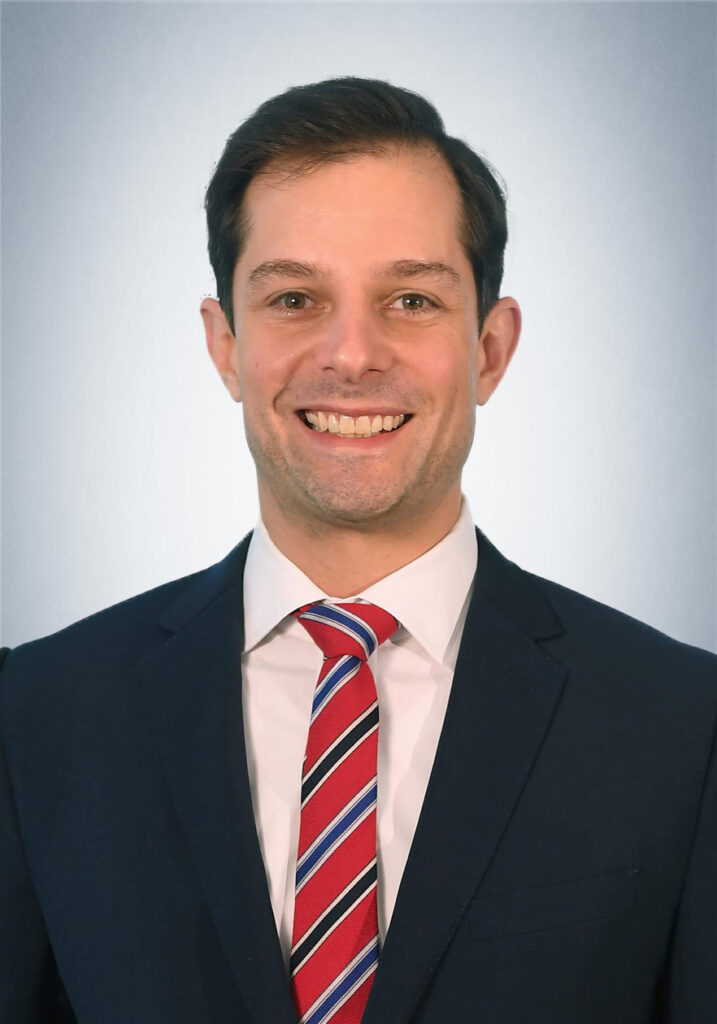


Chris Schnieders is a skilled trial lawyer devoted to representing individuals and families in complex civil litigation — with a focus on catastrophic injury, occupational exposure, and wrongful death sprawy.
Chris has successfully tried and resolved cases across the country, including:
- a $21.8 million verdict in a Federal Employers’ Liability Act (FELA) case in Norfolk, Virginia;
- a $2.575 million verdict w Wichita, Kansas medical-malpractice case involving a fatal opioid overdose;
- a $3.9 million settlement W Warren County, Illinois — the largest settlement in the county’s history — arising from a catastrophic wrongful-death case; and
- a $2.4 million settlement W Cook County, Illinois in a psychiatric-malpractice case involving the suicide of a hospitalized patient.
In addition to his courtroom victories, Chris has consistently helped achieve successful resolutions for thousands of clients in national mass-tort litigations, including those involving Podsumowanie oraz Avandia. His work in these and other pharmaceutical and medical-device cases has led to over a billion dollars in recoveries for injured individuals and their families.
Chris has also served in significant leadership positions in national multidistrict litigations (MDLs), włącznie z:
- Plaintiffs’ Executive Committee W W sprawie: Skoordynowane postępowanie przedprocesowe w sprawie odpowiedzialności za produkty firmy Uloric, Case No. 20 C 623 (N.D. Ill.);
- Plaintiffs’ Steering Committee oraz Chair of the Discovery Committee W In re: Zofran (Ondansetron) Products Liability Litigation, MDL 2657 (D. Mass.);
- Plaintiffs’ Steering Committee W In Re: Cordis IVC Filter Cases, JCCP 4977, Superior Court of the State of California, County of Alameda; I
- Chair of the Discovery Committee W In re: Zoloft (Sertraline Hydrochloride) Products Liability Litigation, MDL 2342 (E.D. Pa.).
Over his career, Chris has built a reputation for holding Fortune 500 corporations and institutions accountable in some of the nation’s most challenging litigation. He has represented clients harmed by toxic exposures, defective medical devices, dangerous pharmaceuticals, and professional negligence, and continues to take on cases involving diesel-exhaust, benzene, and PFAS (“forever-chemical”) contamination.
Regularly recognized by his peers for both skill and integrity, Chris has received numerous honors, including:
- Best Lawyers in America “Lawyer of the Year” (2025) for Mass Tort Litigation / Class Actions – Plaintiffs W Kansas City;
- Best Lawyers in America “Lawyer of the Year” (2023) for Personal Injury Litigation – Plaintiffs W Kansas City;
- designation as a Top 100 Trial Lawyer przez Prawnicy zajmujący się procesami krajowymi;
- recognition as a Kansas Super Lawyer since 2013; and
- an AV Preeminent rating from Martindale-Hubbell, the highest rating for legal ability and ethical standards.
An active member of the legal community, Chris belongs to the Amerykańskie Stowarzyszenie Sprawiedliwości, Missouri, Illinois, and Kansas Bar Associations, National Trial Lawyers, i Metropolitalna Izba Adwokacka Kansas City, where he has served in the past as Vice Chair of the Civil Practices Committee. He is a graduate of the KCMBA Bar Leadership Academy i Ross T. Roberts Inn of Court Program.
Outside the courtroom, Chris volunteers within the community and devotes pro bono time to assisting individuals facing family-court challenges.
Currently, Chris continues to lead litigation on behalf of railroad workers, farmers, and families affected by toxic and environmental exposures — including Roundup, PFAS and biosolids contamination, diesel-exhaust and benzene-related cancers, and other cases involving catastrophic injury and wrongful death. His work combines deep scientific understanding with relentless advocacy for those whose lives have been upended by corporate negligence.
W St. Louis zorganizowano konferencję prasową, aby przedstawić powództwo wniesione do sądu federalnego w celu zablokowania firmie Bayer-Monsanto sprzedaży jej produktu chwastobójczego Roundup.
Akcja szczegółowo opisuje, w jaki sposób czarnoskórzy rolnicy byli zmuszani do kupowania nasion odpornych na Roundup i polegania na coraz cięższych stężeniach Roundupu, który był przedmiotem tysięcy procesów sądowych ofiar chłoniaka nieziarniczego. Ponieważ niektórzy czarnoskórzy farmerzy mają niższe wskaźniki umiejętności czytania i pisania oraz mniejszy dostęp do Internetu, prawdopodobnie nie rozumieli oni ryzyka, a firma Bayer-Monsanto nie podjęła żadnych proaktywnych wysiłków, aby ich edukować lub ostrzegać, adwokaci powodów, w tym partner i współobrońca w sprawie — powiedział Krzysztof Schnieders.
Pełną treść konferencji prasowej można znaleźć tutaj.